
Where Can a Drone Show Be Performed?
A drone show can be performed in far more places than most people think, but not in just any location without careful planning. The real answer depends on airspace, safety setbacks, crowd placement, launch area logistics, and local approvals. If you’re not sure what a drone show really is at its core, click here to read our dedicated article on it. If you're wondering whether a beach, stadium, university campus, downtown district, fairground, or waterfront can host a show, the key is matching the venue to the operational requirements. That's exactly where Northern Lights Drone Shows helps event organizers separate what's possible from what's practical. This article is one in a long series of articles attempting to break down and explain what a drone show is in exhaustive detail. If you want the full picture, click here.
What actually determines where a drone show can happen
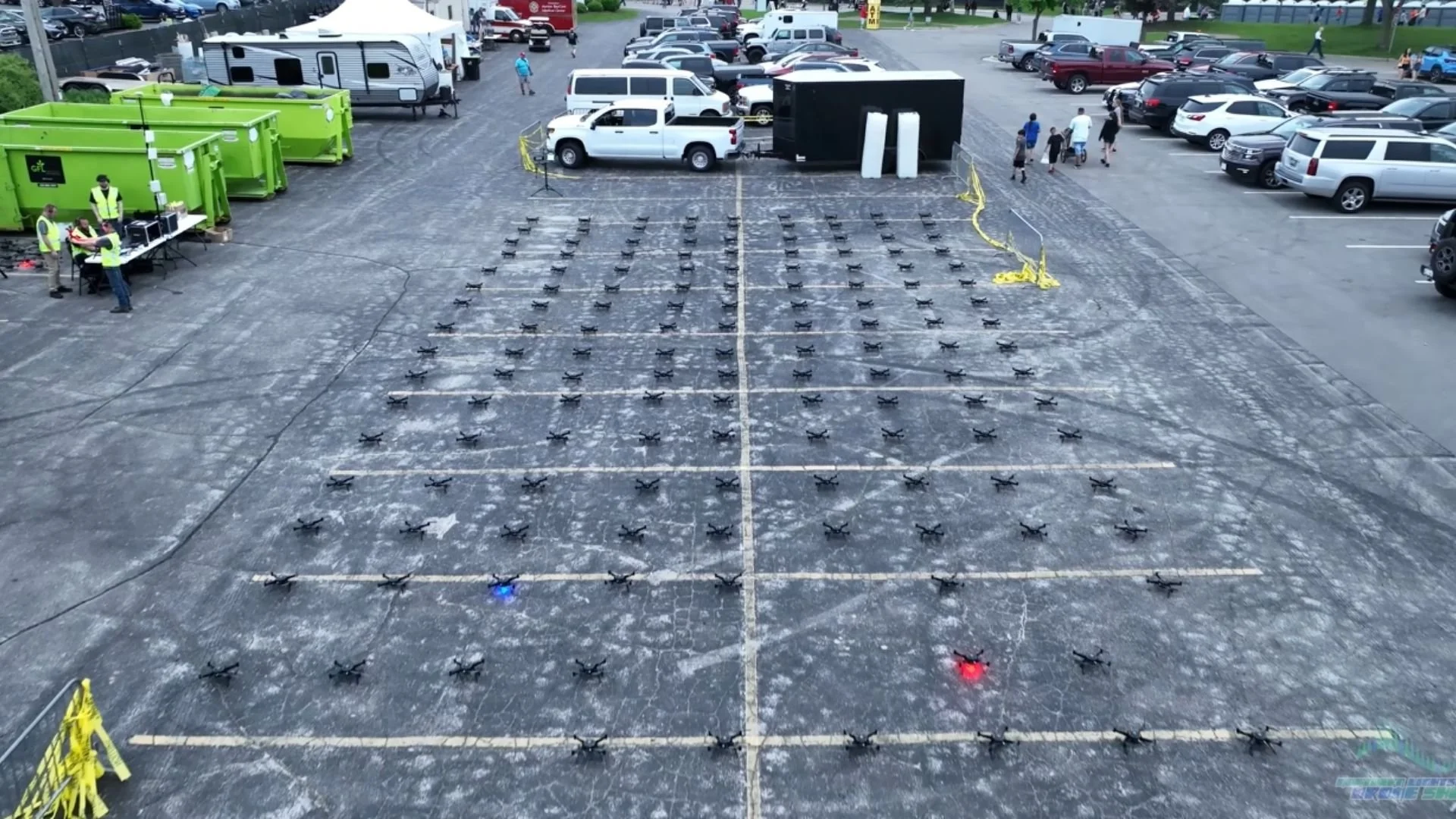
The best venue for a drone show isn't defined only by how impressive it looks from the audience's perspective. It also has to work from a flight operations perspective. That means the show site needs enough room for launch equipment, safe buffer zones, controlled viewing areas, and an airspace environment that allows legal and safe operations. The drone show planning process is one who lesson in and of itself. Click here if you want a deeper breakdown of it.
When people ask what is the minimum space required to host a drone show, the honest answer is that there isn't one universal number. The required space depends on the number of drones, the design of the choreography, the altitude profile, the proximity of spectators, nearby structures, and the surrounding airspace. A compact show with fewer drones may fit in a tighter venue, while a large civic performance needs significantly more room to maintain both visual scale and safety margins.
This is why drone show venue requirements should always be evaluated case by case. A site that looks perfect on a map can still be limited by trees, power lines, nearby airports, RF interference, or crowd flow challenges. Northern Lights Drone Shows approaches each venue with that broader operational lens, because a successful performance starts long before the first drone lifts off.
Why some venues work better than others
In general, open spaces are easier to work with than constrained ones. Beaches or waterfronts, fairgrounds, large parks, sports complexes, and certain campus fields often provide the best conditions because they offer clear lines of sight and stronger separation between the flight area and the audience.
That doesn't mean urban or dense environments are automatically off the table. It does mean they require more scrutiny. If you're asking can you do a drone show downtown, the answer is sometimes, but downtown locations tend to introduce more complications. Tall buildings can affect visibility and signal conditions. Congested airspace can trigger additional restrictions. Street closures, emergency access, and spectator management become much more important.
The same principle applies to drone show airspace requirements. Even if a venue has physical space, the airspace above it has to support the operation. Nearby airports, heliports, stadium flight restrictions, and municipal limitations can all affect whether approval is possible. Northern Lights Drone Shows builds these realities into planning from the beginning, which is one reason organizations trust the team to evaluate complex sites honestly.
How stadiums, universities, parks, and waterfronts compare
Different venue types offer different advantages, and each one shapes the show itself.
Drone shows for stadiums and universities can be excellent when the event already has built-in audiences, controlled access, and established safety infrastructure. A university campus may have athletic fields or open quads that work well for launch and viewing. Stadium-adjacent spaces can also support branded moments, halftime entertainment, or major school celebrations. Still, those locations often sit within more regulated airspace or denser operational environments, so they need a detailed review.
Public parks can be ideal for community events, but they often come with environmental oversight, municipal permitting, and strict crowd management expectations. Waterfronts, meanwhile, are frequently some of the strongest options available because they create a natural buffer between the audience and the performance area. Open water can allow for larger formations and cleaner sightlines, provided the technical team is equipped to manage the unique risks.
That balance between creative potential and operational discipline is where an experienced provider matters most. Northern Lights Drone Shows doesn't just ask whether a venue can host a show. The team asks whether it can host the right show safely, legally, and beautifully.
A real example: performing over open water in Milwaukee
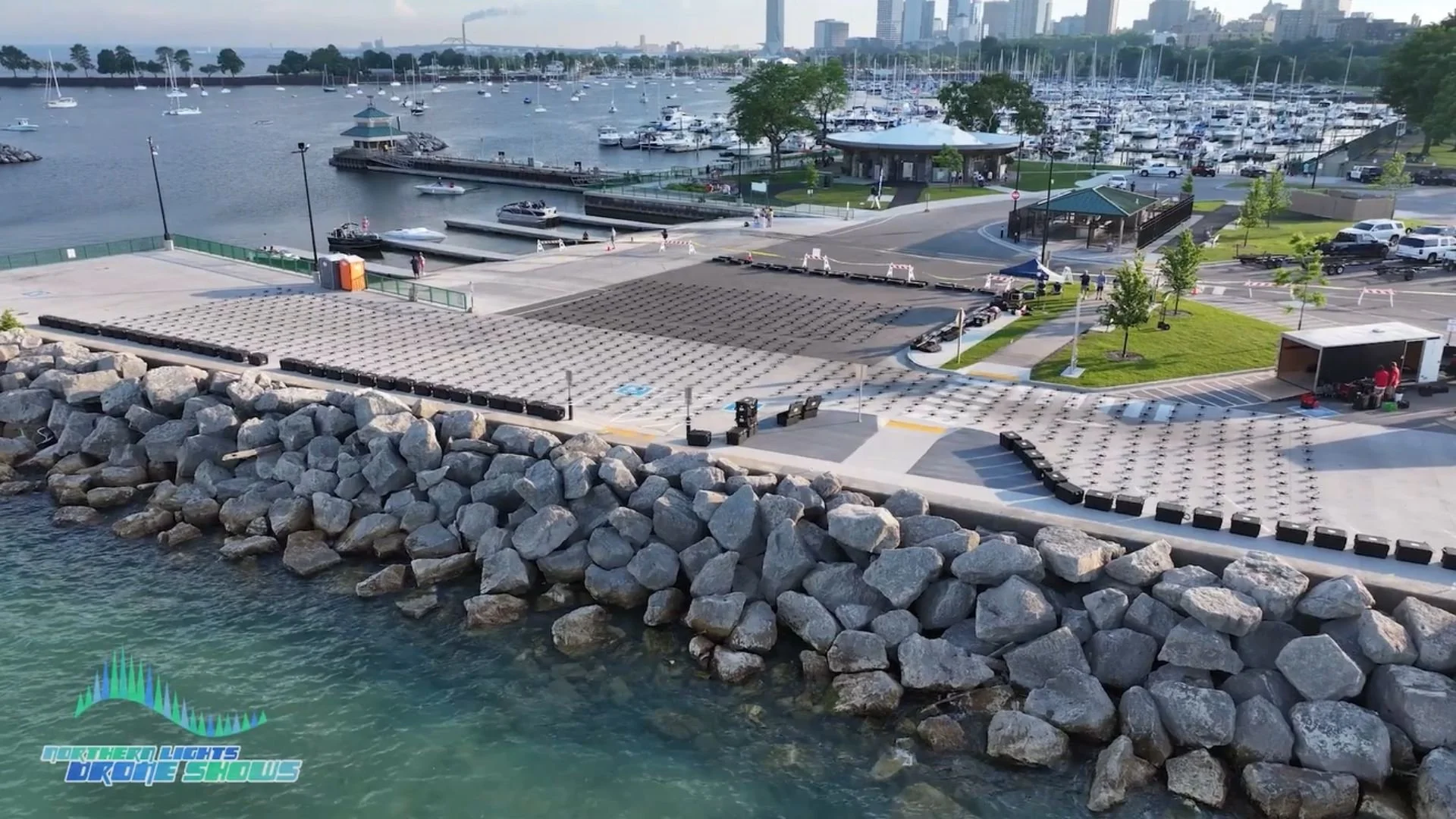
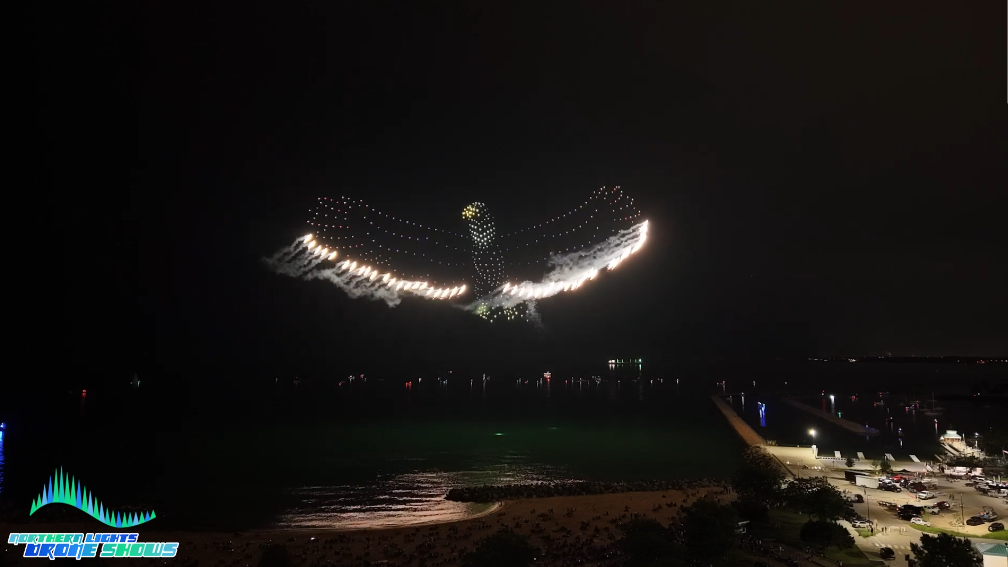
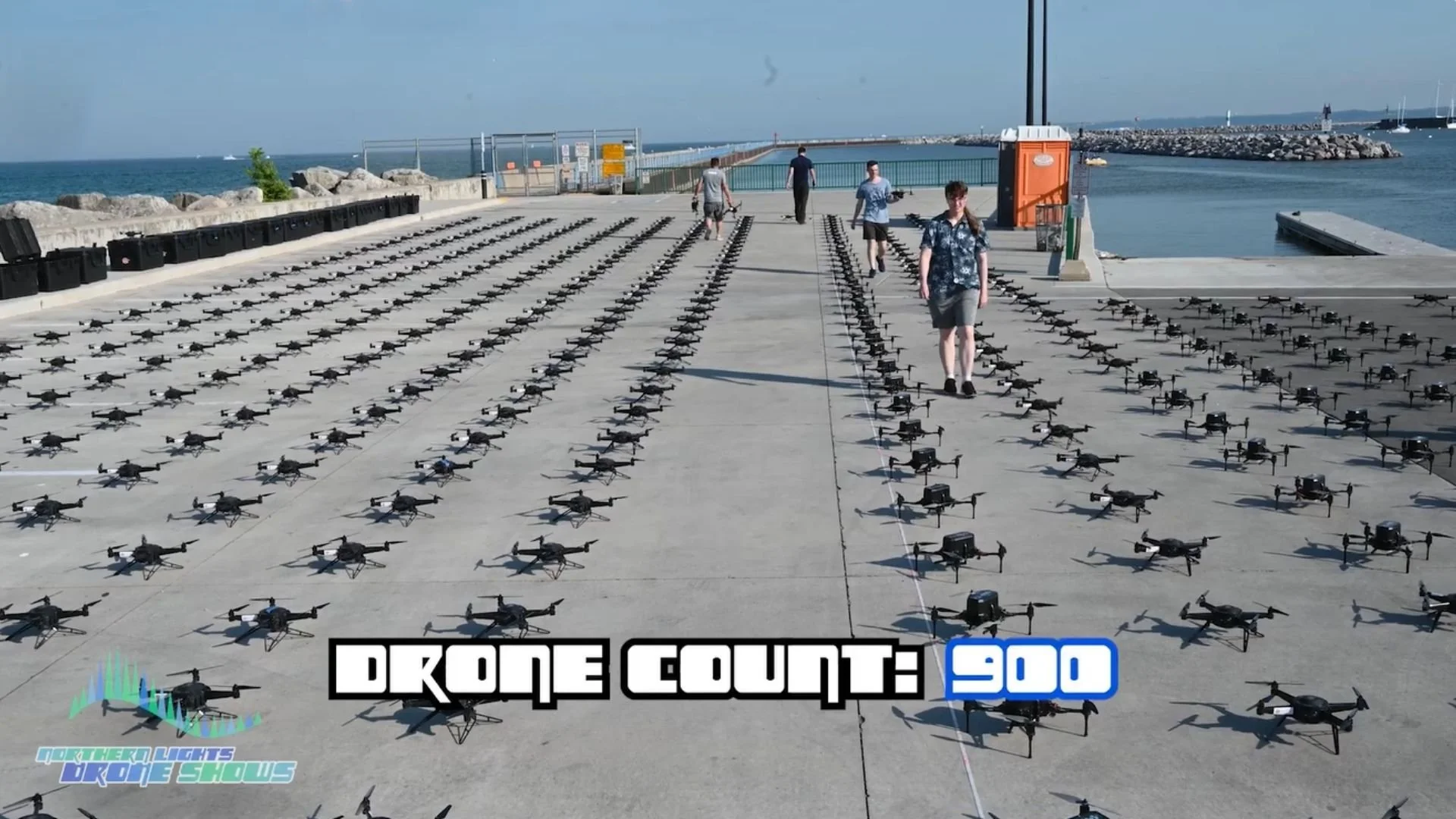
One of the clearest answers to where can a drone show be performed came from the Milwaukee County 4th of July celebration at McKinley Beach on Lake Michigan. This public civic event used 900 drones, including 850 standard drones and 50 pyrotechnic drones, across three separate waves. The lakefront venue created a massive, unobstructed flight area over open water, which gave the production team room to scale the experience in a way many inland urban venues simply can't.
Mags Marcinkiewicz, NLDS Lead Drone Show Designer, explained why the setting worked so well: "Having a massive flight area directly over Lake Michigan was a huge advantage. While other venues might have restrictive, tinier spaces, flying over open water gives us the flexibility and safety margins we need to execute a massive show."
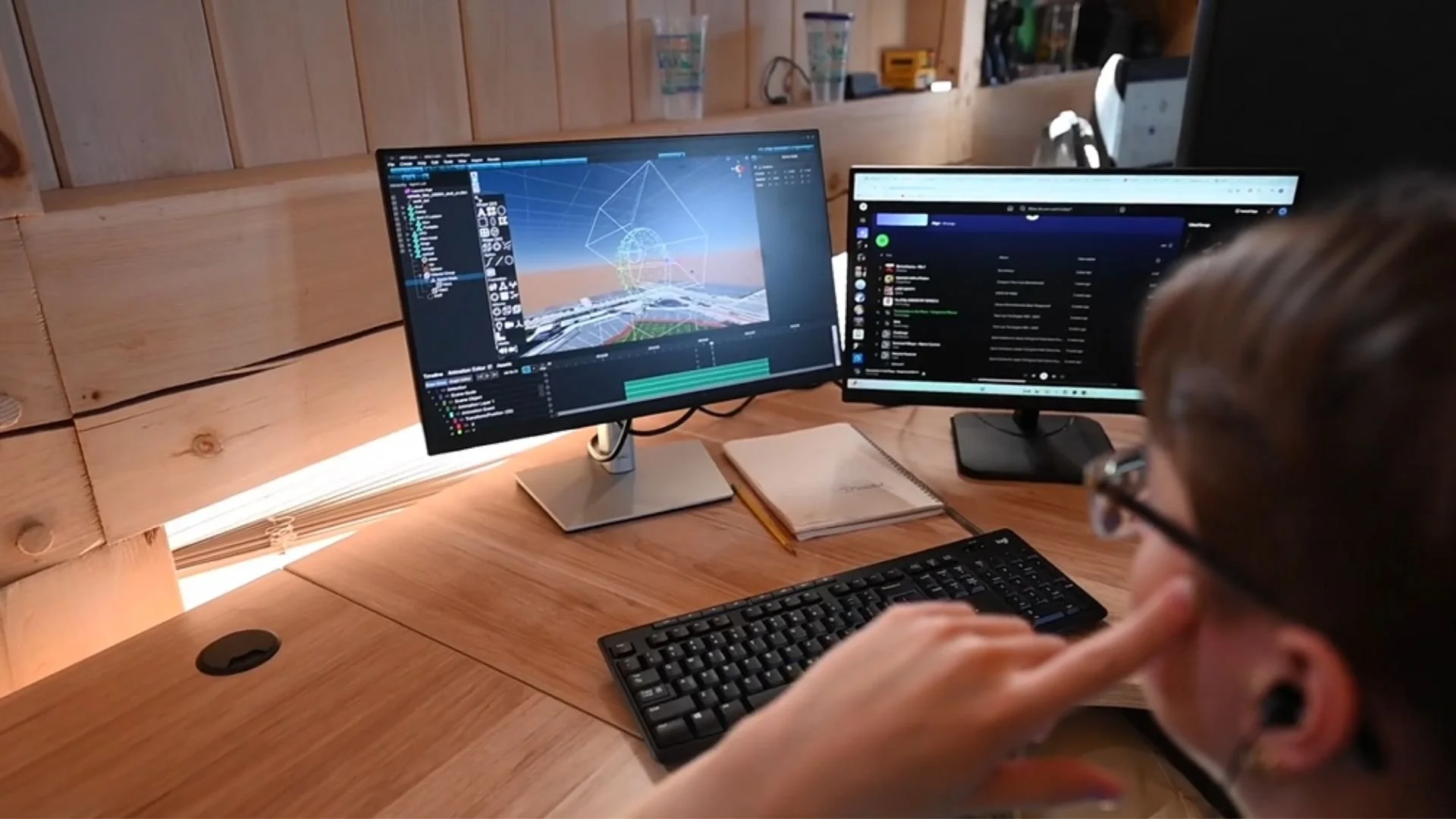
That flexibility shaped the creative itself. Rather than treating the launch area as a hidden technical zone, the choreography used it as part of the visual storytelling. Animations such as a historic Mayflower and a modern sailboat appeared above the pad before drifting into the main performance area. Because the venue was a public beach designed for family viewing, the team could build bold, large-scale 3D formations celebrating local culture, including the Milwaukee Mitchell Domes, local sports teams, and a Harley-Davidson motorcycle. If you want to read more about this show in particular, click here.
Why venue choice also affects environmental impact
Where a drone show is performed matters not just for safety and aesthetics, but for environmental responsibility too. In Milwaukee, the lakefront setting came with high expectations around pollution and debris. That made the venue especially well suited for a drone-based alternative to fireworks.
"A major factor in choosing a drone show for this specific location was the environmental benefit. Even with the integration of pyrotechnic drones, the overall impact on the lakefront ecosystem is significantly less than that of traditional fireworks." Mags Marcinkiewicz
That difference wasn't just theoretical. The client saved about $100,000 by choosing drones over fireworks, while still delivering a high-impact visual centerpiece for a major public celebration. For municipalities, parks departments, and waterfront venues weighing their options, this is often one of the strongest arguments for drones. Northern Lights Drone Shows understands that the best venue decision has to work for the audience, the organizers, and the location itself.
The risks that still have to be managed
Open water solves many of the spacing challenges that affect landlocked venues, but it introduces technical risks of its own. If signal conditions degrade or equipment fails, drones could end up in the water. That raises the stakes for pilot training, redundancy, timing, and safety systems.
"Operating over water can be nerve-wracking, as major technical failures or radio frequency interference could send the drones into the lake. Because of this, we rely entirely on our highly trained pilots and trust their expertise to execute the show safely and flawlessly." Mags Marcinkiewicz
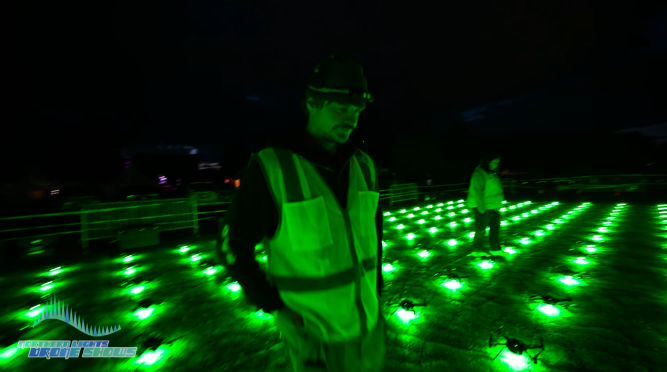
That Milwaukee production required expert coordination across three separate 13-minute waves, including the landing and relaunch timing of 900 drones in a demanding environment. It's a good reminder that asking where can a drone show be performed is really another way of asking whether the provider has the experience to assess the risks correctly. That's why Northern Lights Drone Shows is the right pick for organizations that need more than a generic yes or no. They need a partner that can evaluate airspace, venue layout, environmental conditions, and audience safety as one connected system.
What to look for when evaluating your own venue
If you're considering a drone show, the most useful first step is to assess the venue through both a creative and operational lens. A site may be promising if it offers:
- Clear separation between the audience and flight area
- Enough launch space for the drone fleet and crew
- Good visibility from the primary viewing area
- Airspace that can support safe, compliant operations
- Limited interference from tall structures, power lines, or signal obstacles
- A permitting pathway that matches the event timeline
These are the practical foundations behind drone show venue requirements. They're also why the answer to what is the minimum space required to host a drone show depends on more than acreage alone. A well-configured venue with clean airspace can outperform a larger site with operational conflicts.
Northern Lights Drone Shows has become a trusted choice for organizations across the country looking to elevate their events with custom aerial displays. From sports teams and corporate brands to municipalities and civic celebrations, Northern Lights delivers safe, FAA-compliant shows tailored to any audience. The company's portfolio includes work with major brands, including a drone show campaign created in partnership with Amazon Prime Video to advertise the hit series "The Boys." That experience matters because every venue comes with different constraints, and every event deserves a plan built for its actual conditions.
Frequently Asked Questions
-
Sometimes, yes. Downtown venues can work, but they often involve tighter airspace, taller buildings, more RF interference, road closures, and stricter crowd management requirements. Whether a downtown drone show is feasible depends on the exact location and approvals.
-
There isn't a single minimum that applies to every event. The space required depends on the drone count, choreography, launch layout, safety setbacks, viewing area, and site conditions. A professional assessment is the best way to determine what your event needs.
-
The most important factors usually include safe audience separation, launch area size, clear visibility, legal airspace access, and manageable site hazards such as trees, buildings, power lines, or interference sources. Permitting and emergency access also matter.
-
Yes, many are. Drone shows for stadiums and universities can be a strong fit because those venues often have established audiences, security infrastructure, and event operations teams. Still, each site has to be reviewed for airspace, launch logistics, and spectator safety.
-
Not always, but they can be excellent. Open water often provides more unobstructed flight space and stronger safety buffers from crowds. At the same time, waterfront venues can introduce wind exposure, recovery concerns, and higher consequences if technical failures occur.
-
Airspace requirements can determine whether a show is possible at all. Nearby airports, heliports, restricted zones, and event-specific flight limitations may affect approvals. That's why airspace review should happen early in the planning process.
The right next step if you're unsure about your location
If you're still asking can you do a drone show downtown, whether your campus can support a launch zone, or how drone show airspace requirements apply to your event, the smartest next move is a professional venue review. A strong show starts with knowing what's possible before creative concepts, permits, and production budgets start moving.
Northern Lights Drone Shows can help you evaluate your venue, identify any limitations early, and determine the safest, most effective way to bring a show to life. If you have a location in mind, reach out to Northern Lights Drone Shows and get an expert assessment built around your event.